ForgeOps
A Kubernetes-native deployment & operations engine.
 Go
Go KubernetesgRPC
 PostgreSQL
 Redis
Redis Next.js
 TypeScript
ForgeOps turns the messy, repetitive work of shipping services to Kubernetes into a single declarative engine — environments, rollouts, secrets, and observability defined once and applied everywhere.
ForgeOps
ForgeOps is a Kubernetes-native deployment and operations engine. A declarative spec describes your services, environments, and rollout strategy once; the engine reconciles them against live clusters and keeps them converged.
The problem
Every service I shipped repeated the same plumbing: hand-written manifests, drifting environments, brittle CI scripts, and no single place to see what was actually running. The cost of a new service was measured in days of YAML, not minutes.
Architecture
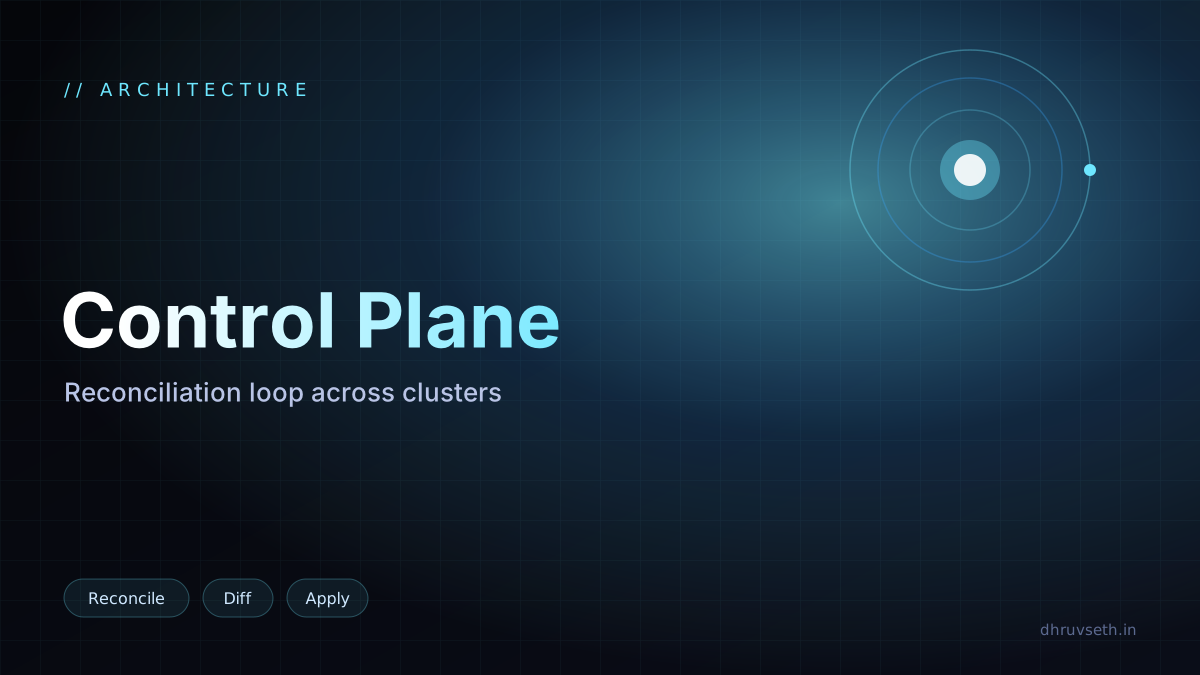
ForgeOps is built around a reconciliation control plane written in Go. A declarative spec is diffed against live cluster state over the Kubernetes API, and the engine converges the two.
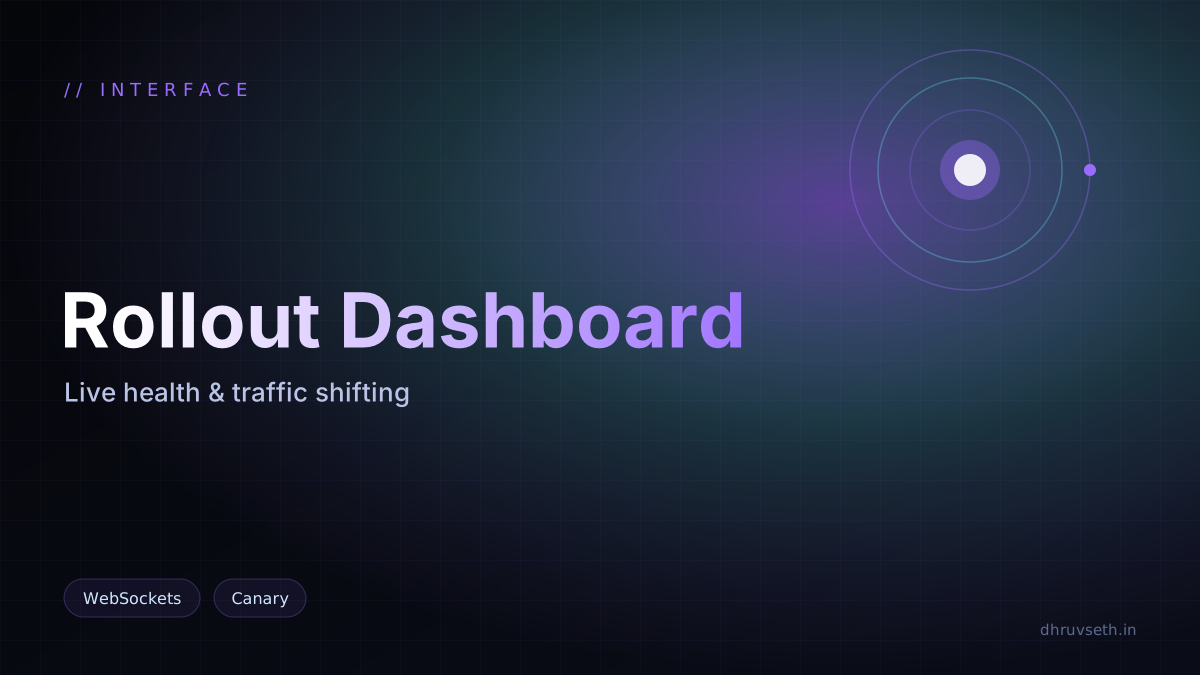
The rollout dashboard streams pod, traffic, and deployment events over WebSockets:
The reconciliation loop
The core loop is deliberately small and idempotent — safe to interrupt and resume mid-rollout:
func (r *Reconciler) Reconcile(ctx context.Context, spec Spec) error {
    desired := spec.Render()
    live, err := r.cluster.Snapshot(ctx, spec.Namespace)
    if err != nil {
        return fmt.Errorf("snapshot: %w", err)
    }
    return r.cluster.Apply(ctx, diff.Plan(desired, live))
}
What it does
- Declarative service specs — one file describes build, deploy, and rollout across all environments.
- Progressive rollouts with automatic health gates and one-click rollback.
- Drift detection that flags and reconciles out-of-band cluster changes.
- Real-time dashboard streaming pod, traffic, and deployment events.
Results
| Metric | Before | After |
|---|---|---|
| New service setup | ~2 days | minutes |
| Reconcile latency | n/a | < 2s |
| Hand-written YAML | hundreds of lines | ~0 |